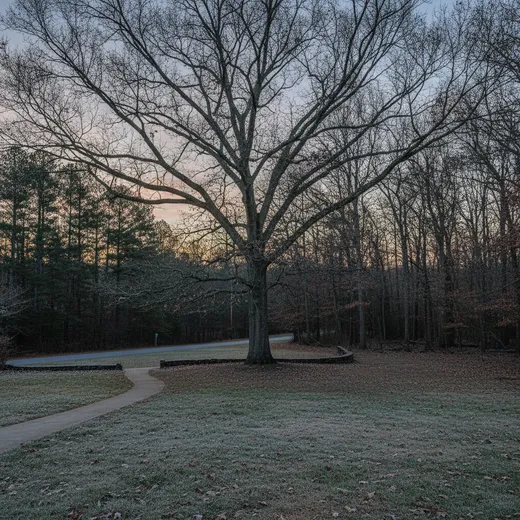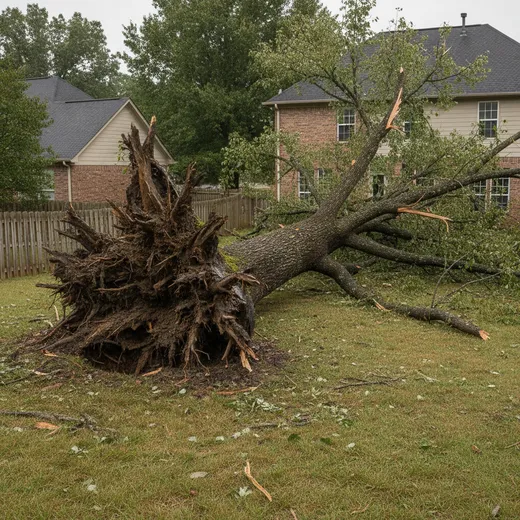
Around Canton and across metro Atlanta, summer means pop-up thunderstorms that can push 40 to 50 mile-per-hour gusts through a neighborhood in a matter of minutes, and the cold fronts that move through in fall and winter bring their own steady wind. A mature oak shrugs those off. A tree you planted last spring does not have the root system for it yet, so a little planning in the first few years pays off for decades.
Start with the right spot
The single most important thing you can do for a young tree happens before it goes in the ground: pick a place where it can grow the way it wants to. A tree crammed against a house, a fence, or a driveway grows lopsided, and a lopsided crown catches wind like a sail. Give it room on all sides, keep it clear of the worst wind funnels between buildings, and match the species to the light and the soil it will actually have.
North Georgia's red clay drains slowly and packs down hard. If you plant in a narrow hole in heavy clay, the roots circle instead of spreading, and a tree with circling roots is a tree that blows over in year five. Dig the planting hole wide, not deep, and loosen the soil out past the edge of the rootball so the roots have somewhere easy to go.
Stake it, but only for a season
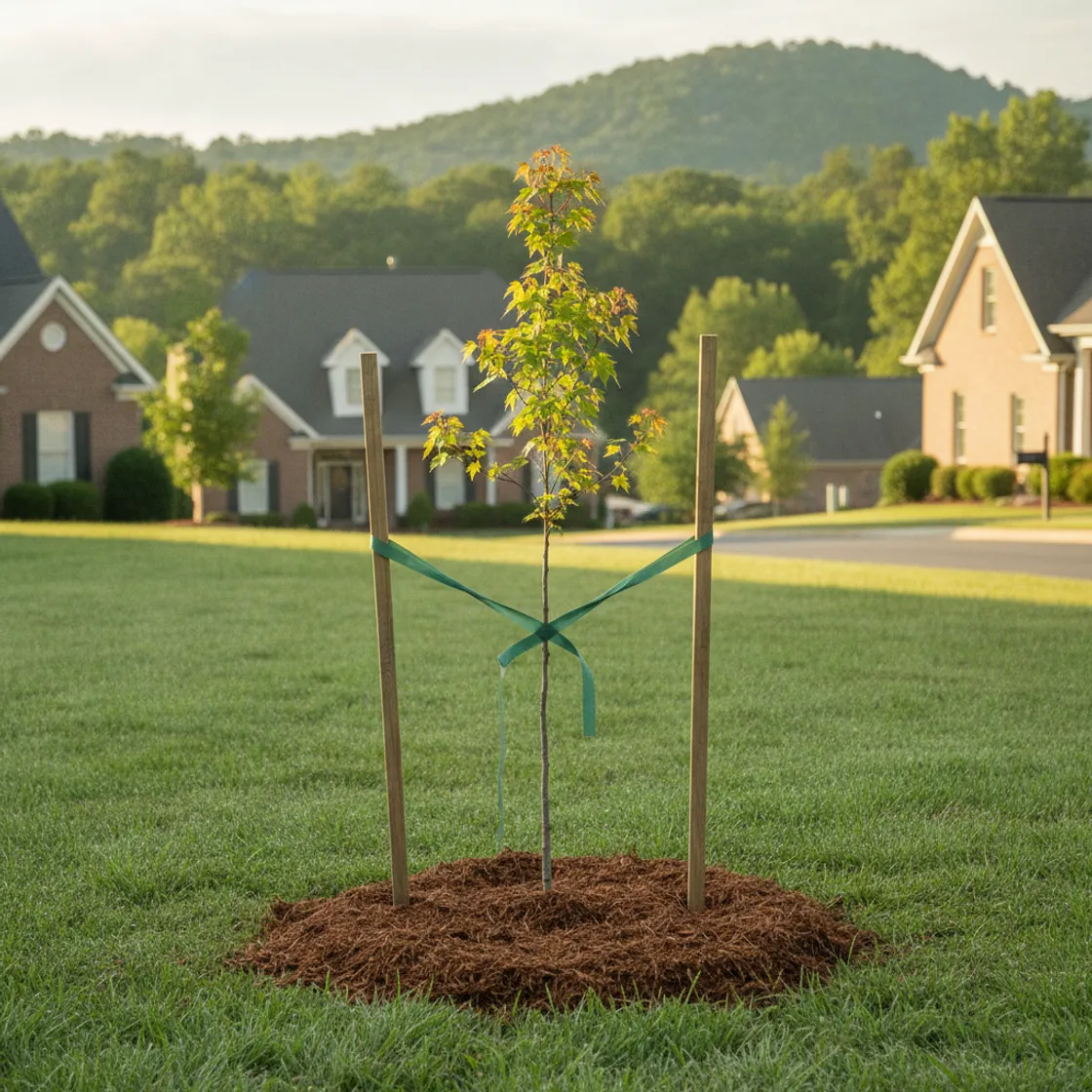
Staking a young tree is worth doing when the trunk cannot yet stand on its own or the site is exposed, but it is one of the easiest things to get wrong. Two stakes set on opposite sides, with a wide soft tie that lets the trunk flex a little, is all most trees need. That small amount of movement is actually how a trunk grows strong, so a tree tied rigidly to a post ends up weaker than one left to sway.
A few staking rules worth following:
- Use a broad, soft tie, never wire or bare rope, which cut into the bark.
- Leave a little slack so the trunk can flex in the wind.
- Set the ties low on the trunk, not up near the top.
- Take the stakes out after one growing season. Ties left on too long girdle the trunk and choke the tree.
Mulch the roots, not the trunk
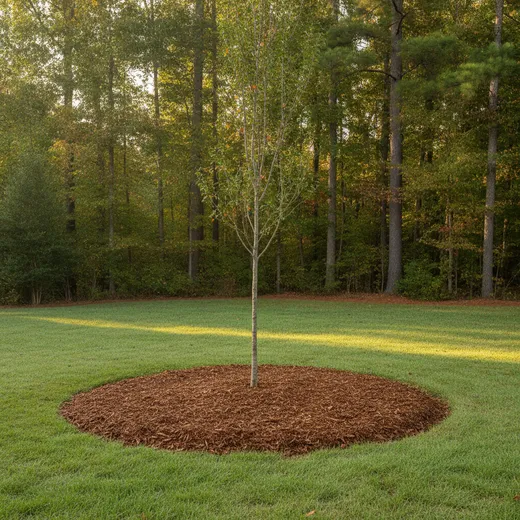
A ring of mulch two to three inches deep holds moisture, keeps the mower and string trimmer away from the bark, and moderates the soil temperature through a Georgia summer. Keep it pulled back a few inches from the trunk itself. Mulch piled up against the bark in a volcano traps moisture, invites rot and pests, and does the young tree no favors.
Water deeply so the roots go down
Wind resistance is really a root-depth question. Shallow, frequent watering trains roots to stay near the surface where they cannot anchor much. A long, slow soak once or twice a week, letting the water reach a foot down, encourages the deep roots that hold a tree in a storm. During the first two summers, a young tree in our heat needs that deep water even when it has rained, because a brief thunderstorm often runs off the clay before it soaks in.
Prune for a strong frame
Light structural pruning in the early years sets a tree up to handle wind for the rest of its life. The goal is one strong central leader and well-spaced branches, not a big bushy top. Removing a competing second leader and any crossing or rubbing limbs while they are small means the tree never grows the weak, tight forks that split apart in storms. It is careful work, though, and bad cuts on a young tree cause damage that shows up years later, so if you are not sure what to take, it is worth asking.
How Engram's Tree Service can help
We are a family-owned tree service based in Canton, and we have spent more than 25 years working on the trees around metro Atlanta homes. If you want a second opinion on staking, pruning, or which trees on your lot are most at risk in a storm, we are glad to take a look. When an older tree does become a hazard, we handle everything from careful pruning to full removal, and our 24-hour line is there by call or text when a storm does not wait for business hours.