Services
Stump Grinding
Once the tree is gone, the stump does not have to stay. We grind it below grade so you can replant, resod, or reclaim the yard.
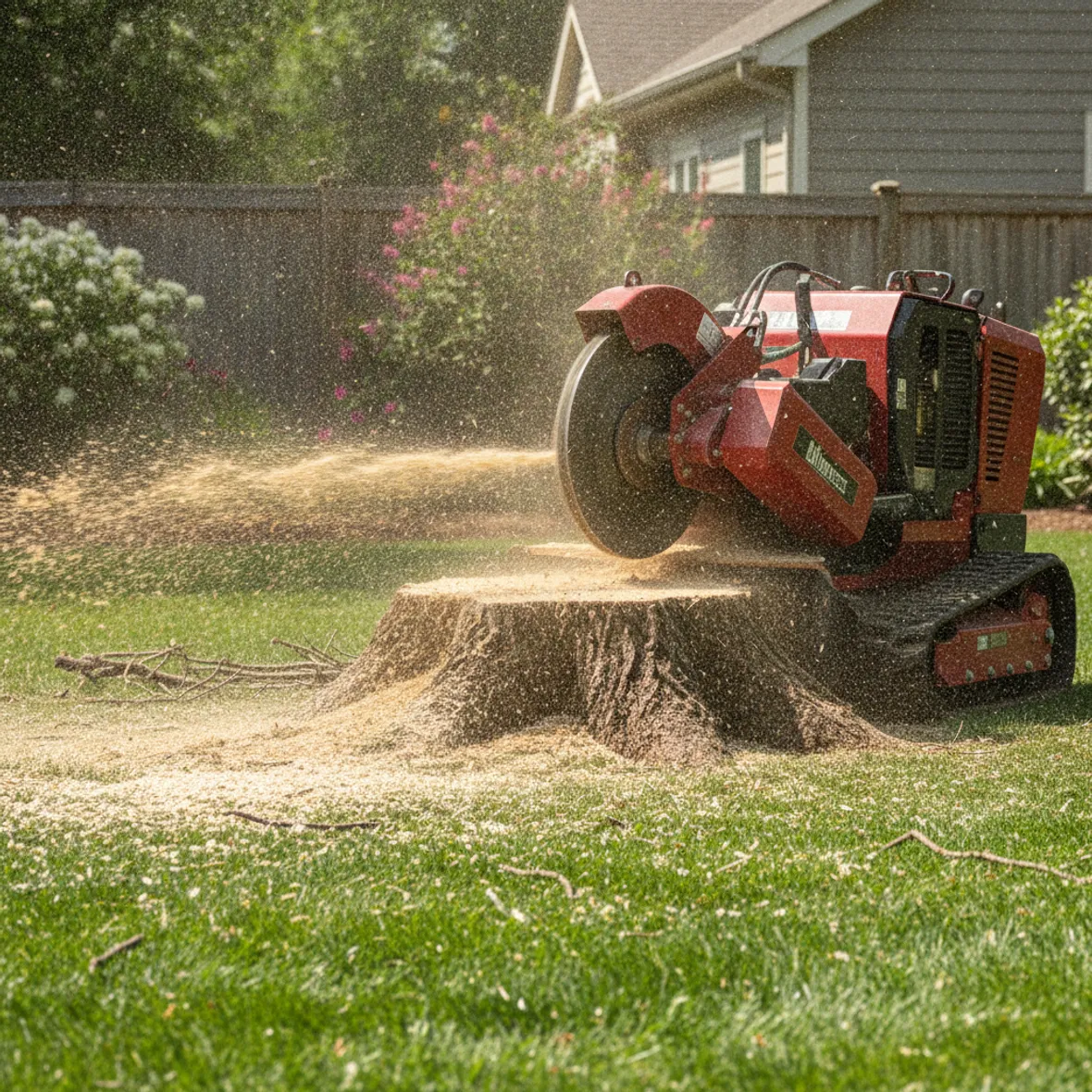
- Below grade We grind several inches under the surface, not just flush
- Any size From a backyard stump to a large hardwood base
- Chips your call Raked back to settle, or hauled off with the debris
- Licensed & insured Workers' comp and liability on every job
Why grind the stump at all
Once a tree is down, the stump is easy to ignore, until you hit it with a mower, catch a toe on it, or watch it sprout again. A left stump is a trip hazard, a mower killer, and a slow-rotting home for ants, termites, and fungus right next to your yard. Some species will even send up shoots and try to grow back.
Grinding solves all of that in an afternoon. A stump grinder chews the stump and the top of the main roots down below the surface, so the spot can be filled, sodded, or replanted. You get your yard back instead of a rotting reminder.
How stump grinding works
A stump grinder is a machine with a spinning wheel of carbide teeth that grinds wood away a little at a time. We work the wheel across the stump and the buttress roots, taking it down several inches below the surrounding grade, and deeper if you plan to replant something in the same spot.
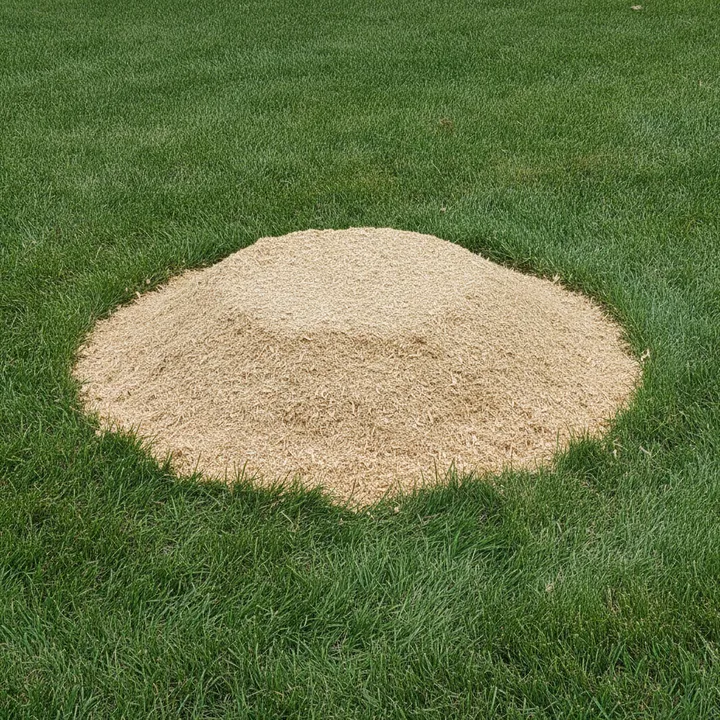
The stump turns into a pile of coarse wood chips and soil mixed together. We can rake those grindings back into the hollow to settle over time, or haul them off with the rest of the debris and leave you clean, fill-ready ground. We tell you the trade-off at the estimate so you can choose.
What a grinding visit looks like
- Free estimate
Robin looks at the stump, its size, and the access, and gives you a written price. No charge.
- Check for utilities
We flag anything that needs a utility locate before we grind, so nothing underground gets hit.
- Set up and protect
We position the grinder, clear the area, and screen nearby windows and cars from flying chips.
- Grind below grade
The stump and the tops of the main roots come down several inches under the surface.
- Clean up
We rake the grindings back to settle or haul them away, and leave the spot tidy.
What you can do with the space after
Grinding is only the first step. Here is where most of our customers take it.
Replant
Grind a little deeper and you can put a new tree or shrub in nearby, once fresh soil is added.
Lay sod or seed
Fill the hollow with topsoil and the spot blends back into the lawn within a season.
Reclaim a bed
Turn the old stump's footprint back into usable garden bed or a clean mulch ring.
Just be rid of it
Sometimes you simply want the hazard and the eyesore gone. That is a fine reason too.
Roots, depth, and what stays
Grinding takes out the stump and the tops of the main roots, not the entire root system. The smaller roots left in the ground simply decay over the next few years, which is normal and not a problem for most lawns and beds. If you are planning to build, pour concrete, or plant a large tree in the exact spot, tell us at the estimate and we will grind deeper and wider.
How deep we go is your call, guided by what you want to do next. A spot you plan to sod needs less depth than one where a new tree will go. We match the grind to your plan rather than to a one-size setting.
- Fresh grindings settle over time, so mound the fill slightly and top it up after a few weeks.
- Wood chips are low in nitrogen as they break down, so add topsoil, not just grindings, before you plant.
- If the old tree was diseased, replanting the same species in the same spot is not always wise; ask the arborist.
Where we grind stumps
Based in Canton and working across the north metro. If your town is close by, call and ask.
Stump grinding questions
How deep do you grind a stump?
Usually several inches below the surrounding grade, which is enough to sod or seed over. If you plan to replant a tree or build in the same spot, we grind deeper and wider. You tell us what the space is for and we match the depth to it.
Do you remove the roots too?
We grind the stump and the tops of the main buttress roots. The smaller roots stay in the ground and rot away naturally over a few years. Fully excavating an entire root system is a bigger, more disruptive job that is rarely necessary.
What happens to all the wood chips?
They are yours to keep or lose. We can rake the grindings back into the hollow to settle, or haul them off with the rest of the debris so you have clean ground. Just tell us which at the estimate.
Can I plant a new tree where the old one was?
Yes, with a little prep. We grind deeper, you replace the grindings with fresh topsoil, and you are set. If the old tree was diseased, ask us about choosing a different species for that spot.
Do you grind the stump right after a removal?
Stump grinding is a separate step you can add to any removal, done the same day or scheduled later. Tell us at the removal estimate if you want the stump included in the price.
Related services
Tree removal
Grinding is the clean last step after the tree itself comes down.
Learn more →Tree trimming and pruning
Keeping the trees you keep strong, safe, and well shaped.
Learn more →Certified arborist
Advice on what to replant, and whether the spot is right for it.
Learn more →Crane and bucket work
For the big removals that leave the biggest stumps.
Learn more →Free estimates, done by a certified arborist.
Tell us about the tree. Robin will come look and give you a straight answer.